
The Nataraja form of Lord Shiva captures the cosmic dance of Shiva. Lord Shiva is one of the most powerful gods in Hinduism. One of his forms, Nataraja, showcases the divine dance while standing on a dwarf demon known as Apasmara. In this blog by Cottage9, we will understand the deep meaning of Shiva’s dance and the story of Apasmara. We will also discuss the Nataraja statue significance and why people admire this statue.
Who is Nataraja?
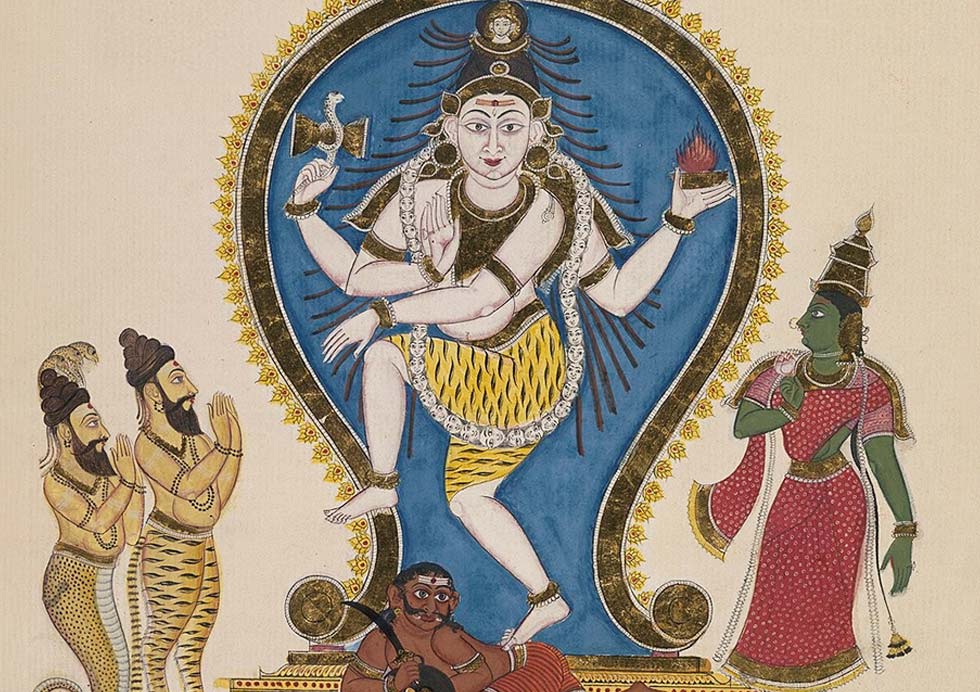
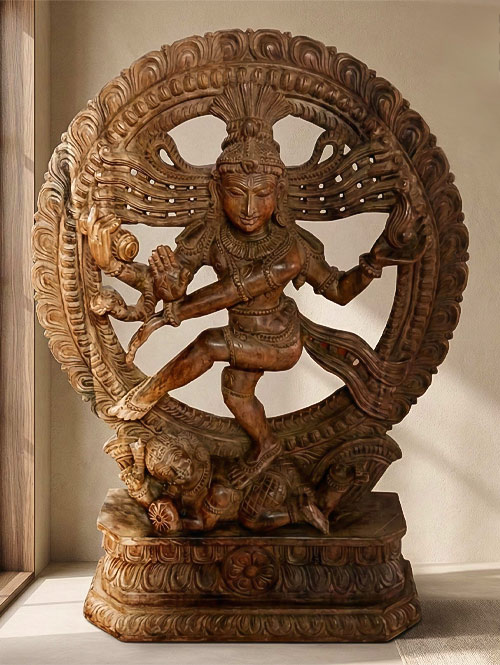
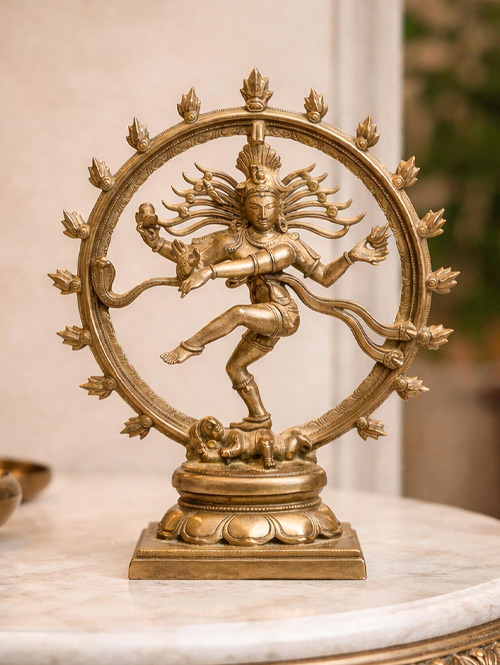
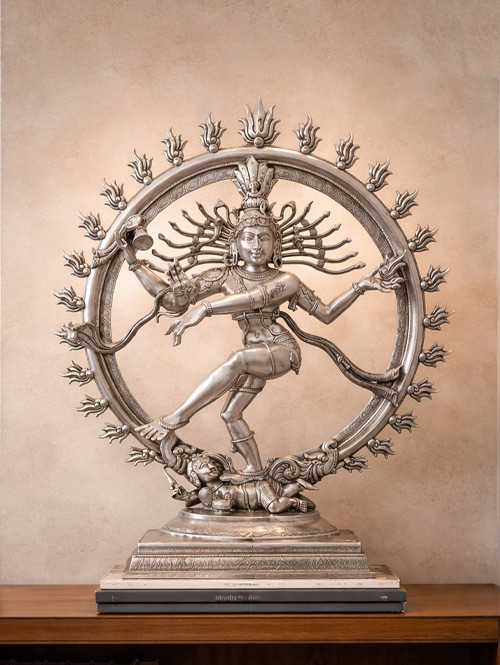
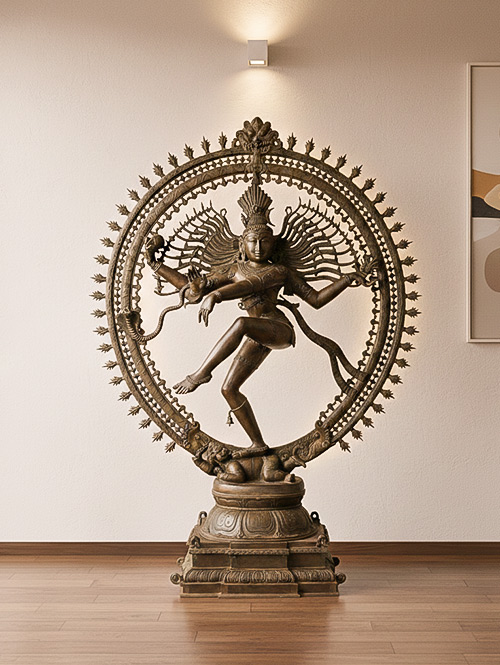
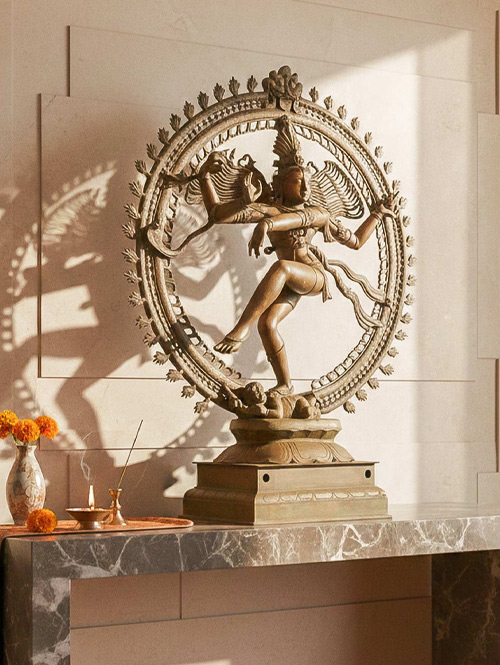
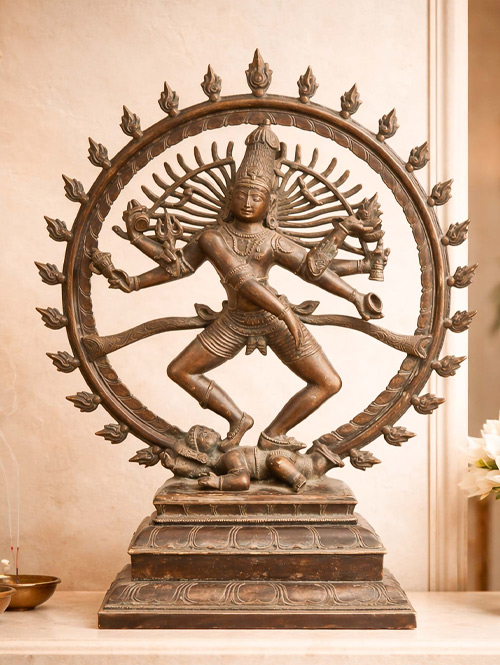
Nataraja is Shiva’s form, which means “King of dance.” In this form, Shiva performs the cosmic dance known as Tandava. This dance represents creation, protection, and destruction. Scholars also present the Tandava in two forms, the Ananad Tandava and the Rudra Tandava. One is happiness, and the other is an angry version of Lord Shiva. The most famous representation of this dance is the original Nataraja statues. Artists during the Chola period in South India created the concept of Nataraja. The statue of Nataraja represents Lord Shiva dancing inside a fiery circle, holding a drum in his right hand, fire in his left hand, lifting one leg, and pressing down a dwarf demon under his foot.
Why Does Shiva Dance?
Why Does Shiva Dance?
The dance of Shiva is not normal. It represents five important actions that are creation, preservation, destruction, illusion, and liberation. All these are important parts of life. The dancing Shiva Nataraja statues remind us that every change is necessary. Apasmara is not only a dwarf demon but also represents the negativity and darkness inside the human mind. This darkness includes ego, anger, fear, and ignorance. Lord Shiva did not kill Apasmara; he controlled him. This gives us a lesson that we must control the negatives instead of letting them overpower us. At Cottage9, we have a beautiful collection of Nataraja bronze statues that reflect tradition and devotion.
The Story Behind Shiva’s Dance
The Story Behind Shiva’s Dance
There was a group of sages that lived in a forest. According to them, rituals were more meaningful and powerful than gods. To realize them and teach them a lesson, Lord Shiva appeared in a beggar's form. The sages became angry and tried to destroy the beggar with their powers. They attacked him with different creatures, including snakes that Lord Shiva controlled. Later, they sent a powerful dwarf demon, namely Apasmara. When Lord Shiva defeated all the dangerous creatures, he began his cosmic dance. He placed Apasmara under his foot and performed Tandava. This dance represents that the god’s divine energy is much greater than ignorance. Thus, sages realized their mistakes and surrendered to Lord Shiva. Many people keep the dancing Shiva Nataraja statues at home to bring spiritual growth and positive energy.
Who is Apasmara?
Apasmara is a dwarf demon, which means “ignorance.” Apasmara also represents confusion and epilepsy. However, in a spiritual context, he stands for ignorance and forgetfulness. This ignorance keeps humans away from the truth. Lord Shiva keeps the demon under his foot, which signifies that he does not completely vanquish ignorance but controls it. One of the main aspects of the Nataraja statue is that as long as humans live, ignorance always exists. But with awareness, you can suppress it and keep it under control.
What Does the Nataraja Statue Represent?
What Does the Nataraja Statue Represent?
The dancing Shiva statues carry deep symbolism.
The Circle of Fire
The ring around Lord Shiva represents the whole universe. It also represents the cycle of birth and death.
The Drum (Damaru)
Shiva holds a damaru in his upper right hand, representing the rhythm of creation. People believe that the sound of the damaru initiated the creation of the universe.
The Fire
Shiva holds fire in his upper left hand, representing destruction. When creation is initiated, destruction must also happen.
The Raised Foot
The Tandava form shows Lord Shiva with one foot raised in the air, which signifies the god's protection and grace.
Apasmara Under the Foot
The Apasmara under Shiva’s foot represents ignorance. By stepping on him, Shiva shows the triumph of wisdom over ignorance.
To bring the divine blessing of Lord Shiva to your home, bring the Nataraja bronze sculpture from Cottage9. The sacred blessings of Lord Shiva fill the space with positive energy.
The Famous Chola Bronze Nataraja
The original Nataraja statue originated from the Chola Dynasty in Tamil Nadu. The Chola artists crafted the bronze statue of Nataraja using special techniques. Today, this bronze statue from the Chola period is a beautiful masterpiece of Indian art. There is the Chidambaram Nataraja Temple in Tamil Nadu, which is deeply connected to Nataraja. Here, Lord Shiva is worshipped as Nataraja. Many devotees believe that Shiva continues his cosmic dance at this sacred place.
FAQs
Who is the wife of Nataraja?
Nataraja is another form of Lord Shiva. Therefore, the consort of Nataraja is Goddess Parvati.
Why does Lord Shiva dance as Nataraja?
Shiva dances as Nataraja to showcase the cosmic style of creation, destruction, and preservation through his unique dance form.
Why is Apasmara shown under Shiva’s feet?
Apasmara represents forgetfulness, ignorance, and ego. Shiva stepped on Apasmara to control the ignorance for true wisdom to arise.
Why does Shiva not destroy Apasmara completely?
Shiva does not destroy Apasmara because ignorance will always exist in some form. This can only be controlled by knowledge and awareness.
Why is the Nataraja dance shown inside a circle of fire?
The fiery circle around the Nataraja represents the endless cycle of birth, life, and transformation.